
Theatre


The first thing to transform from theatre in the Manneristic style was a revision of the architecture of the stage. Most of the technology used in current commercial plays was developed in this period. The new space became a ‘framed’ area, only the necessary actions were seen by the viewers; the purpose was to hide the machinery. This subsequently allowed for a more dramatic and realistic evolution to the performed works’ storyline etc.. Early on in the Baroque period, the decoration of the theatres was quite restrained and it gradually became increasingly ornate until it reached its peak, culminating in the exuberance and grandeur of the Rococo. After that point it started to get more restrained, particularly the architecture, as it gradually moved into the revival of the Classical period.   
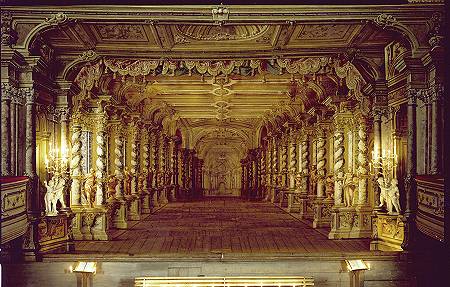

An example of a Baroque style theatre stage

Comments

Popular posts from this blog

Fine Art

Painting In its most typical manifestations, Baroque art can be defined by great drama, rich, deep colours and intense contrasts, particularly between light and dark shadows. Paintings almost seem to come out of the dark. These effects are chiaroscuro effects. This style of painting was meant to evoke emotion and passion, and was not based on the tranquil rationality of the Renaissance. In opposition to Renaissance art, which often depicted moments before an event, artists of the Baroque period chose to capture the epicenter of the event, the most dramatic point. The Storm of the Sea of Galilee - Rembrandt (1633) This painting was stolen from Isabella Stewart Gardner Museum in 1990 and is still missing. The Entombment of Christ - Caravaggio (1602-1603) A few of the greatest painters of the time were Rembrandt, Caravaggio, Rubens, Poussin, Vermeer and Velázquez. Caravaggio’s style combined a realist...

Architecture

         Buildings of the Baroque period are composed of great curving forms and billowing facades. Ground plans were of unprecedented size and complexity and there were various shapes of domes.  Some examples of these buildings are the churches of Francesco Borromini, Guarino Guarini and Balthasar Neumann.  Most architectural structures were executed on a colossal scale, utilising aspects of urban planning and landscape architecture. This is most clearly seen in Bernini's elliptical piazza in front of St. Peter's Basilica in Rome, and in the gardens, fountains and the palace at Versailles.  Axial overview (looking over and across) of Piazza of St. Peter's, Vatican City, Rome Aerial view of Versailles Palace In Spain in the 17th century, some features of Baroque art emerged in the architectural style of J. B. de Herr era’s school .  The splendour and luxuriousness of the Baroque style were given a unique interpretation i...